Gartner Recognizes Visionary Softeon

IFS Softeon, the warehouse management system (WMS) provider, was named a Visionary in the Gartner Magic Quadrant for Warehouse Management Systems for the 15th consecutive year.
Gartner delivers actionable, objective insight to executives and their teams. Its expert guidance and tools enable faster, smarter decisions and stronger performance on an organization’s mission-critical priorities. The Gartner Magic Quadrant evaluates vendors based on their Ability to Execute and Completeness of Vision. We are honored to be included among the recognized vendors in this important report.
As part of IFS, Softeon now brings together deep warehouse execution expertise with AI-driven, end-to-end supply chain intelligence, enabling organizations to drive greater efficiency, visibility, and control across planning and fulfillment.
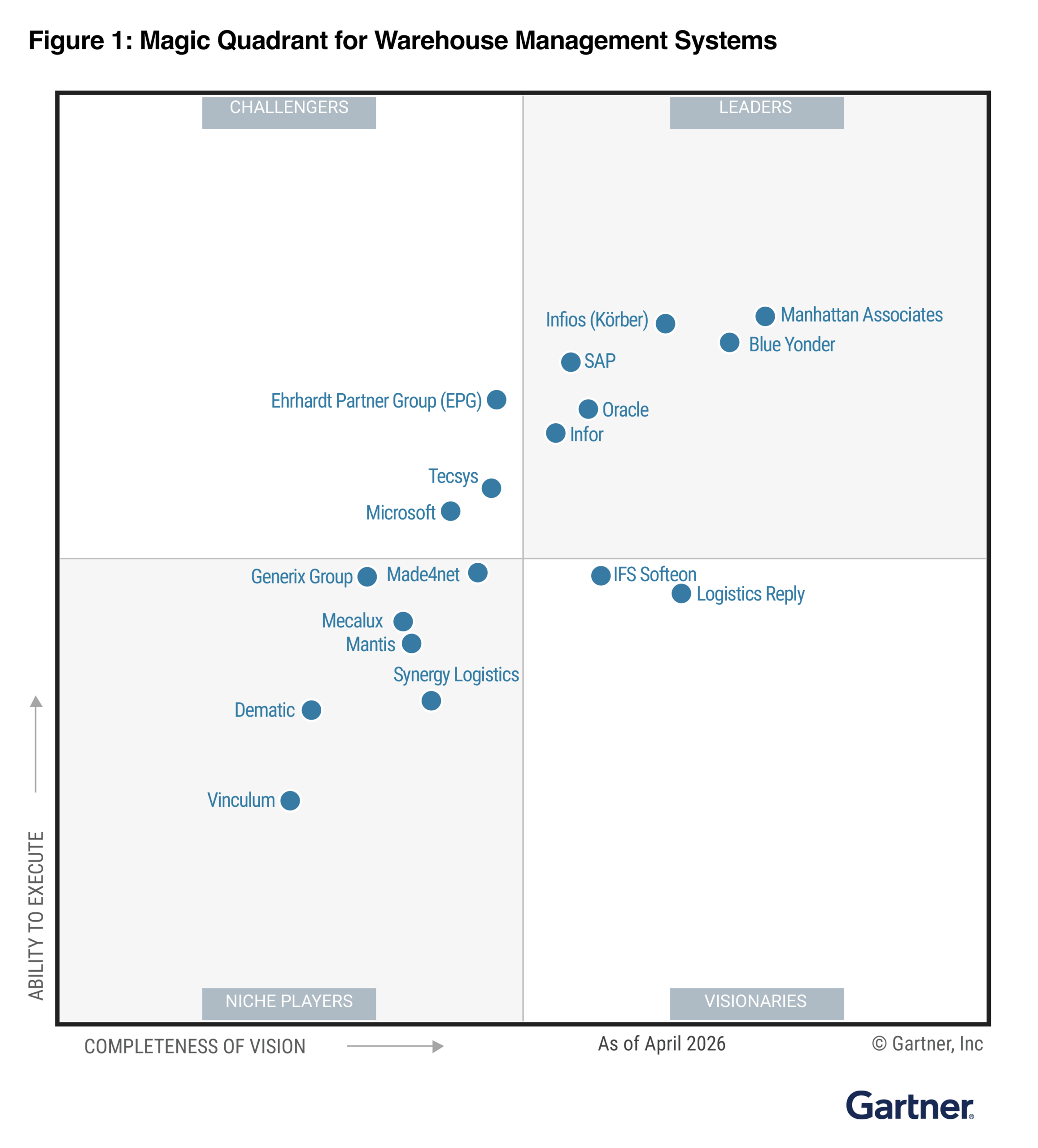
Magic Quadrant for Warehouse Management Systems.
This next chapter strengthens our ability to deliver innovation at scale while maintaining the flexibility and focus that have long defined Softeon.
“We see a clear shift in the market from warehouse management to intelligent execution,” said Jim Hoefflin, CEO, IFS Softeon.
“IFS Softeon is uniquely positioned to lead that shift, combining proven Tier 1 WMS capabilities with AI-driven orchestration and end-to-end supply chain intelligence. By closing the gap between planning and execution, we help our customers make faster, better decisions and maintain performance even in the face of constant disruption.”
IFS Softeon Warehouse Management System (WMS) delivers exceptional scalability, supporting the full range of distribution operations, from straightforward Level 1 facilities to the most complex Level 5 environments, all within a single, unified platform.
Gartner delivers actionable, objective insight to executives and their teams.
Placement in the Gartner Magic Quadrant reflects IFS Softeon’s ability to go beyond traditional warehouse management, delivering intelligent, real-time execution across complex fulfillment environments.
By orchestrating labor, inventory, and automation in real time, organizations can maintain flow, protect throughput, and adapt quickly to changing demand.
With the added strength of IFS, these capabilities extend beyond the warehouse, connecting planning and execution to enable more informed decisions across the enterprise.
This helps eliminate the gap between what the business plans and what the warehouse can deliver.


About Post Author